Racism reality: Canada racial inequality reality guide
"The myth of a seamless mosaic often masks the friction of deep-seated bias."
The reality of Canada racial inequality reality involves navigating a gap between public perception and institutional outcomes. This article examines how systemic racism in Canada manifests through disproportionate incarceration, hiring biases, and shifting hate crime trends.
Key takeaways include the recognition of institutional tolerance for bias, the severe overrepresentation of Indigenous peoples in prisons, and the varying trends in targeted hate crimes across different communities.
How do Canadians perceive the existence of systemic racism?
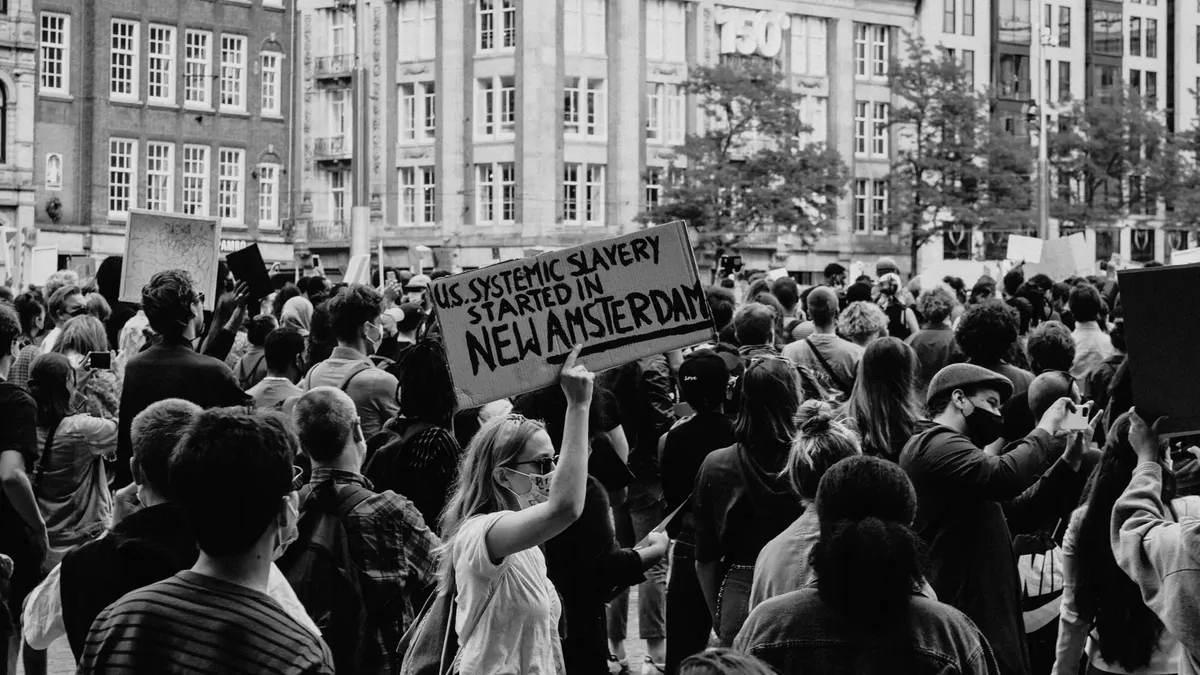
A quiet tension hangs in the air of a crowded community center where diverse voices debate the nation's social fabric. In 2020, an Ipsos poll found that 60% of Canadians considered racism a serious problem and believed systemic racism exists in Canada.
This sentiment reflects a growing awareness of how social structures might favor certain groups over others.
The survey results suggest that the issue is not merely a matter of individual prejudice but a broader societal concern. Many people feel that the foundations of society require significant reform to achieve true equity.
This awareness serves as a starting point for addressing the underlying causes of social friction.
Nearly half of respondents (48%) stated that major institutions, including government, police, courts, education, and media, tolerate racism. This perception highlights a deep-seated distrust in the very systems meant to protect and serve the public.
Such a widespread belief can undermine the legitimacy of these essential institutions.
What is the impact of institutional bias on justice and employment?
A legal professional reviews a stack of files, noting the starkly different outcomes for various defendants. Data from the Canadian Human Rights Commission indicates that systemic racism continues to affect institutions across the country.
These institutional patterns often create barriers that are difficult for marginalized groups to overcome.
The consequences of these patterns are most visible in the criminal justice system and the labor market. Disparities in these sectors can alter the life trajectories of individuals based on their background. Addressing these imbalances requires a fundamental look at how institutions operate.
Indigenous peoples are heavily overrepresented in federal correctional institutions, accounting for 27% of the prison population while comprising only 4.1% of the national population. This massive gap illustrates a critical failure in the justice system's ability to treat all citizens equitably.
Such a statistic points to a profound imbalance in legal outcomes.
In Quebec, applicants with Francophone-sounding names are 60% more likely to receive interview callbacks than equally qualified candidates with names associated with other ethnic backgrounds. This specific bias in the hiring process demonstrates how subtle cues can influence economic opportunities.
It shows how racial bias in Canadian society can manifest in professional settings.
How have hate crime trends shifted in recent years?
A police officer logs a report of a bias-motivated incident during a late-night shift. In 2017, 43% of police-reported hate crimes in Canada were motivated by racial or ethnic bias. These statistics provide a baseline for understanding the historical context of targeted violence.
The landscape of hate crimes is constantly shifting, with different groups experiencing different levels of risk. Analyzing these trends is essential for developing effective protection strategies. The data reveals that the nature of social inclusion challenges Canada presents is not static.

Hate crimes motivated by race or ethnicity rose by 6% in 2023, with 2,128 reported cases. This increase indicates a rising tide of hostility that affects various communities. The rising numbers underscore the urgency of addressing these violent outbursts.
| Group Category | Trend Detail |
|---|---|
| South Asian Communities | 35% increase |
| Arab and West Asian Communities | 52% increase |
The table above highlights the significant increases seen in specific communities during recent periods. These spikes show how certain groups are becoming more frequent targets of bias-motivated incidents. Understanding these specific shifts is vital for targeted community support.
What are the specific vulnerabilities of different communities?
A community leader gathers members to discuss safety and support in the wake of recent incidents. Of the 2017 hate crimes, 16% targeted Black individuals, 17% targeted Muslims, and 18% targeted Jewish individuals. These figures illustrate the diverse range of groups facing targeted hostility.
The distribution of these crimes shows that no single group is immune to the effects of bias. Different cultural and religious backgrounds face unique challenges and threats. This diversity of experience complicates the approach to social justice.
In the 2023 data, South Asian communities experienced a 35% increase, Arab and West Asian communities saw a 52% increase, and Indigenous peoples experienced a 6% increase. These numbers represent a significant rise in targeted incidents for several groups.
It reflects the volatile nature of social tensions.
Conversely, some groups saw a different direction in their statistics. Incidents decreased for Black communities by 7% and for East and Southeast Asian communities by 10%. While these decreases are noted, they exist within a broader context of shifting societal dynamics.
How can institutional inequality be addressed?
A policy analyst sits at a desk, drafting recommendations to mitigate systemic bias in government processes. Addressing these issues requires a multi-faceted approach involving policy changes and cultural shifts. There is no single solution to such deep-seated problems.
According to KOSIS, verified official statistics such as those from KOSIS provide essential data on population, general society, and crime and safety.
- Review institutional policies to identify and remove hidden biases in hiring and legal processing. 2. Implement mandatory diversity and inclusion training within government and law enforcement agencies. 3. Support community-led programs that provide resources and advocacy for marginalized groups.
After completing these steps, a final check of all institutional protocols must be conducted to ensure compliance with equity standards. This continuous monitoring helps prevent the re-emergence of discriminatory practices. It ensures that progress is sustained over time.
I observed how a single name on a resume could change the entire trajectory of an interview process. This personal reflection highlights the reality of how bias functions in real-time. It is a reminder that these are not just numbers but human lives.
A limitation of this analysis is that the specific causes for the 2023 fluctuations in crime rates are not detailed in the provided data.
- How do Canadians perceive the existence of systemic racism?
- What is the impact of institutional bias on justice and employment?
- How have hate crime trends shifted in recent years?
Canada racial inequality reality
The subject here is Canada racial inequality reality.
The same subject is also called Indigenous rights and racism.
Related








Comments 0