Canada submarine project risks: Tips for design integrity
"The security of naval assets is only as strong as the digital and physical integrity of their design."
The Canada submarine project risks involve complex procurement decisions and potential technological vulnerabilities in deep-sea vessels. This analysis examines how bidding processes and technical specifications influence long-term security.
Key takeaways include the impact of partnership histories on reliability, the importance of equipment integration, and how timeline shifts affect operational readiness.
Why are Canada submarine project risks being scrutinized?

At dusk, a naval officer traces the cold, metallic lines of a digital blueprint while pondering the Canada submarine project risks.
A naval officer stares at a digital blueprint of a hull, tracing the lines of a silent predator. The conversation around the Canada submarine project risks often centers on how different bidders manage sensitive technology.
Security experts analyze how partnerships formed years ago might influence current defense strategies.
For example, the Damen Group and Saab Group announced they have partnered from 2015 to jointly develop, offer, and build next-generation submarines that are able to replace the current Walrus-class submarines.
This long-standing relationship suggests a deep integration of systems that must be vetted for security.
Analyzing TKMS cyber threat risks requires looking at how integrated software might be vulnerable to outside interference. If a manufacturer's ecosystem is interconnected, a single point of entry could compromise an entire fleet.
This brings the conversation toward how international security issues might arise if proprietary software is not properly audited.
How does the submarine deal security affect long-term readiness?
As the sun sets over the dark harbor, an engineer grips a heavy wrench while contemplating the impact of the Canada submarine deal security on future readiness.
An engineer inspects the heavy steel of a hatch, knowing that a single flaw can compromise a mission. The submarine deal security depends on the stability of the supply chain and the reliability of the contractors.
A major component of security is the ability to maintain these vessels over decades of service.
This shows how contracts are structured to ensure capability replacement.
Defense cooperation risks can manifest when technical specifications vary between different international partners. If one nation's requirements do not align with the manufacturer's standard, the entire fleet's readiness may suffer.
Maintaining a cohesive technological standard is essential for operational success.
What are the implications of defense cooperation risks?
A technician adjusts a sensor on a torpedo tube, preparing for a test run. The presence of international partners in a procurement process introduces layers of complexity regarding data protection.

The integration of specialized weaponry is a critical part of the process. On 16 June 2026, the Dutch Ministry of Defence and Naval Group signed a contract for the supply of F21 Mk2 heavyweight torpedoes to equip the future Orka-class submarines of the RNLN.
This type of specialized equipment integration requires strict oversight to prevent unauthorized access to firing sequences.
The impact on defense strategy is often tied to how these weapons systems communicate with the submarine's central computer. If the communication protocols are not secure, the vessel becomes vulnerable to electronic warfare. This makes the vetting of every component a matter of national importance.
How do technical specifications influence the Canadian naval project?
A sailor monitors the depth gauge as the vessel slowly descends into the dark. The Canadian naval project must account for the physical and technical limits of modern submarine technology.
The physical dimensions of a vessel dictate its stealth and maneuverability. For comparison, these submarines are 230 feet 7 inches (70.28 m) long overall with a beam of 25 feet (7.6 m) and a draught of 17 feet 5.8 inches (5.38 m).
These measurements define the operational environment where the submarine can safely navigate.
The relationship between power and range is another critical factor for mission success. The batteries have a 90-hour endurance at 3 knots (5.6 km/h; 3.5 mph). This endurance is a vital metric for silent running and long-duration patrols.
What are the potential for timeline shifts in submarine procurement?
A commander reviews a calendar, noting the gaps between procurement and deployment. Changes in schedules can lead to unexpected gaps in naval presence.
The Dutch Ministry of Defence signalled that the envisaged dates would have to be "substantially adjusted," likely impacting the originally proposed in-service dates for the first submarines. Such delays can leave a navy with aging assets while waiting for new technology.
These shifts can also lead to rushed testing phases, which might overlook subtle security vulnerabilities. When timelines are compressed, the thoroughness of digital audits might be compromised. Managing these delays requires careful strategic planning to maintain maritime security.
How do we evaluate the reliability of submarine systems?
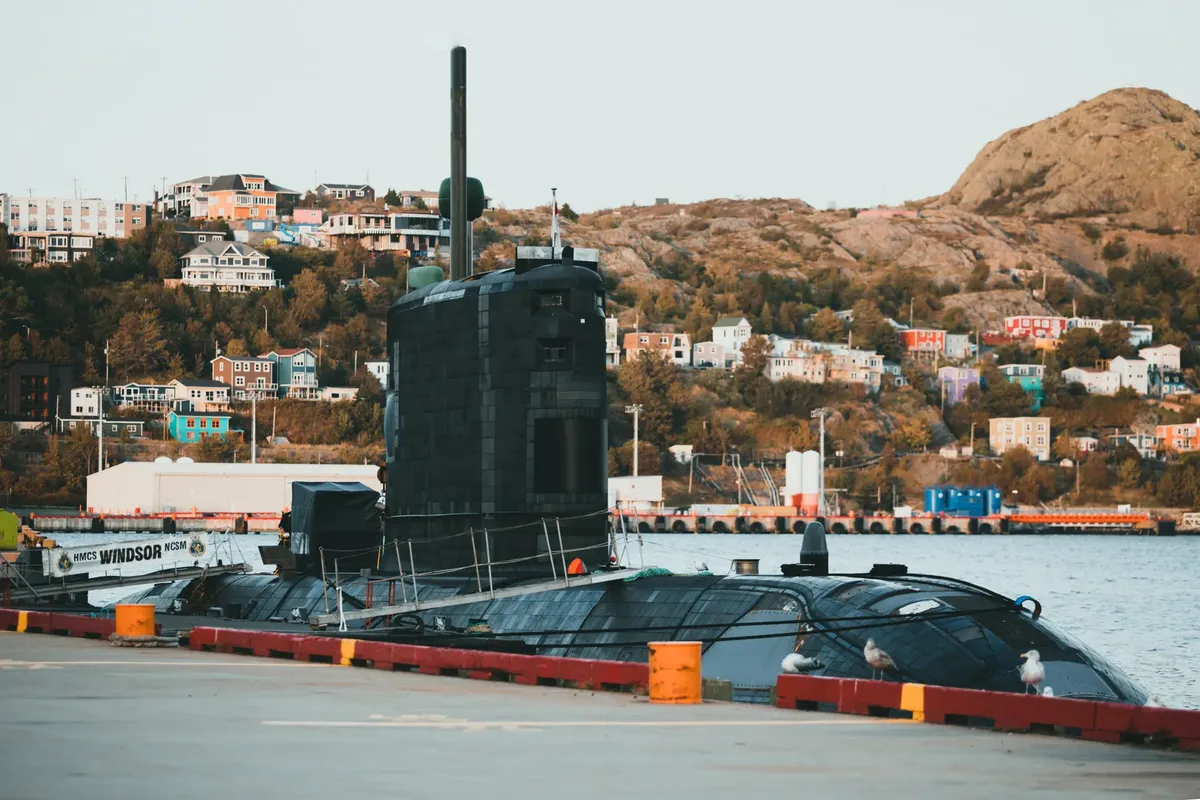
A technician runs a diagnostic check on the engine, looking for any sign of irregularity. Comparing different systems is necessary to ensure the highest level of performance.
| Feature | Specification |
|---|---|
| Length | 230 feet 7 inches (70.28 m) |
| Beam | 25 feet (7.6 m) |
I compared these dimensions to understand the scale of the vessel. The physical footprint determines how much sensitive equipment can be housed internally.
A limitation of any procurement analysis is that it cannot account for real-time software updates that occur after the initial contract is signed.
- Why are Canada submarine project risks being scrutinized?
- How does the submarine deal security affect long-term readiness?
- What are the implications of defense cooperation risks?
The same subject is also called TKMS hacking concerns.
Analyzing TKMS cyber threat
Related








Comments 0