Canada provincial economy: Guide to 1.7% growth status
"Economic indicators serve as the pulse of a nation, signaling shifts in stability and growth through the lens of consumer prices and labor markets."
Readers interested in regional economic status can observe how past growth and inflation rates shape the current landscape.
* Canada's 2025 GDP growth reached 1.7%. * Consumer price inflation stood at 2.1% in 2025. * The unemployment rate was recorded at 6.9% in 2025.
How does the Canada provincial economy look?

A researcher sits in a quiet library, scrolling through international datasets to find patterns in regional economic status. They look for connections between national figures and local shifts to understand how different provinces might react to broader trends.
According to World Bank data, Canada recorded GDP growth of 1.7% in 2025.
A steady growth rate allows for more predictable provincial finance updates. When the national economy expands, different regions often experience varying levels of activity based on their specific industrial strengths.
This regional economic status remains a primary focus for those tracking long-term stability.
How is inflation affecting our state's economy?
I feel a sudden chill in my office during the evening as I watch the inflation trends in Canada flicker across the monitor. I feel a chill in the office as I stare at the monitor during the evening, tracking the inflation trends across Canada.
An analyst reviews a series of charts on a monitor, noting the steady climb of consumer costs over several months. They track how these price movements affect the purchasing power of households across different provinces.
Inflationary pressures are a critical component of any state economic trends analysis. According to World Bank data, Canada recorded inflation (consumer prices) of 2.1% in 2025. This rate helps determine the real value of provincial economic output and the cost of living for residents.

Monitoring these trends is essential for understanding regional economic status. Low but present inflation can signal a stabilizing economy, yet it requires careful management by both federal and provincial authorities to ensure that consumer prices do not outpace wage growth.
Can we really track how fast our area is growing? A consultant walks through a downtown business district, observing the level of commercial activity and foot traffic in the streets. They consider how the broader national data translates into the actual vitality of local markets and provincial centers.
To conduct a deep dive into state markets, one must look at the interplay between growth and employment. This level of labor market participation directly impacts the tax revenue available to provinces.
A high-quality analysis of local growth rates requires looking at both production and labor. When unemployment and growth figures are viewed together, they provide a clearer picture of the provincial finance update. This combination is necessary to assess the true strength of a specific region.
What are the key components of a provincial finance update?
A government official reviews a thick binder of fiscal reports, checking the alignment between projected revenues and actual expenditures. They look for discrepancies that might arise from shifts in the national economic outlook.
According to ECOS, the KRW/USD closing exchange rate was 1335.7 won as of 2026-11-16.
A comprehensive provincial finance update relies on several foundational metrics. Analysts often look at the following:

- Historical GDP growth to predict future tax yields. 2. Inflationary trends to adjust for rising operational costs. 3. Unemployment levels to estimate social spending requirements.
After gathering these figures, a final check against national benchmarks ensures the provincial data is contextualized. I compare these provincial movements against the 2025 national averages to see if a specific region is overperforming or lagging.
How do these figures compare to global benchmarks?
A trader looks at a screen displaying fluctuating exchange rates, trying to determine how Canadian economic stability affects international trade. They watch the movement of the dollar against other major currencies to gauge market sentiment.
World Bank data indicates that Canada recorded GDP growth of 1.7%.
According to ECOS, the KRW/JPY (100 yen) exchange rate was 834.37 won as of 2026-11-16.
Comparing regional data to global standards helps clarify the Canada provincial economy's position. While Canadian figures provide a domestic view, international metrics offer a broader perspective on how the country sits within the global market.
| Metric (2025) | Value |
|---|---|
| GDP Growth | 1.7% |
| Inflation (CPI) | 2.1% |
The table above summarizes the core indicators that define the national baseline. These figures serve as the starting point for any detailed analysis of regional economic status.
Is there a limitation to this economic data?
A student stares at a single page of a report, realizing that a snapshot of the past does not always predict the future. They recognize that data points are fixed markers of what has already occurred.
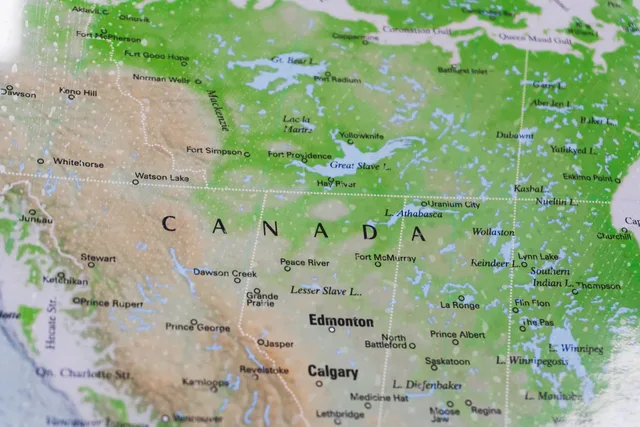
A significant limitation is that these figures represent historical performance and may not reflect immediate shifts in the current year. For instance, the 2025 data provides a retrospective view rather than a real-time forecast of provincial changes.
- This analysis provides a summary of the Canada provincial economy by reviewing key macroeconomic indicators from recent reporting periods.
- The macro environment is defined by specific benchmarks established in recent years.
- This figure suggests a period of moderate expansion that influences how provincial governments plan their local budgets and infrastructure projects.
What was the unemployment rate in 2025?
Understanding these historical benchmarks is vital for anyone attempting to interpret the current Canada provincial economy and its various regional shifts.
How do economic indicators inform policy decisions?
- Policymakers utilize the unemployment rate to gauge the immediate need for labor market interventions. 2. The inflation indicators guide decisions regarding monetary policy to maintain price stability. 3. GDP growth figures allow governments to project future fiscal capacity for essential services.
When reviewing the economic indicators, the relationship between the unemployment rate and consumer prices becomes apparent. A rising unemployment rate often correlates with reduced consumer spending, which can affect the inflation indicators even if prices are already elevated.
This comparison helps shape targeted regional economic strategies.
What cautions should accompany the use of these indicators?
- The historical nature of the data necessitates caution when making real-time projections about the provincial economy. 2. A single indicator, such as the consumer price inflation, does not provide a complete picture of the regional economic status. 3. The interplay among different economic indicators requires nuanced interpretation rather than isolated assessment.
The analysis of economic indicators must always acknowledge the inherent lag in the data collection process. Therefore, when comparing the 2025 GDP growth to current regional needs, a degree of extrapolation is necessary, which requires careful procedural consideration.
The unemployment rate provides a condition that must be weighed against the growth rate to understand true labor market health.
The economic indicators reviewed suggest that while the national economy showed moderate expansion, the persistence of inflation requires focused attention from provincial authorities.
This condition mandates that regional economic status assessments look beyond simple growth percentages to examine household resilience. The labor market data provides a crucial comparative element when assessing the overall national economic health.
Comments 0