Canada emergency relief team: How to guide aid delivery
"The struggle to deliver life-saving supplies remains a central tension in global relief efforts, where access is often dictated by geopolitical barriers rather than human need."
The Canada emergency relief team operates within a broader context of international aid challenges, where systemic blockages often prevent supplies from reaching crisis zones.
While specific domestic operations vary, global humanitarian logistics face severe constraints, such as the denial of entry for aid convoys and the physical obstruction of transit routes.
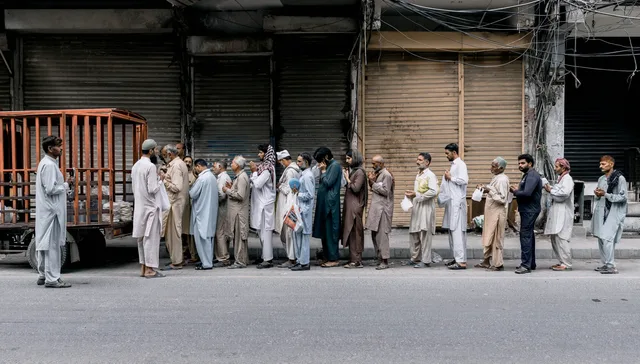
Key takeaways include the impact of restricted crossings, the disparity between ceasefire-era delivery volumes and current rates, and the strategic plans proposed to create dedicated transit zones.
What is the Canada emergency relief team context like? At midnight in a dim office, the coordinator rubs their tired eyes while reviewing the logistical files for the Canada emergency relief team.
A researcher sits in a quiet library in Toronto, scrolling through economic datasets to understand the nation's industrial output. They note that Canada's participation in the global economy includes a significant technological component.
This economic capacity often supports the logistical infrastructure required for international aid.
The rep in this context is part of a global network of responders. A Korean aid group Canada might focus on specific regional logistics, while an Overseas rescue team Canada would prioritize immediate field response.
Understanding the Cultural issue relief Canada involves recognizing how these groups navigate complex political landscapes. Every International aid group news report highlights the difficulty of moving resources through contested borders.
The team operates within a framework of rapid mobilization and specialized logistical coordination to address immediate humanitarian needs.
How are humanitarian transit areas being planned?
An architect unrolls a large blueprint on a wooden table, tracing the lines of a proposed logistics hub. They envision a space where supplies can be sorted without the immediate threat of conflict.
The Gaza Humanitarian Foundation outlined a $2 billion plan to establish "Humanitarian Transit Areas" in and potentially outside Gaza. This strategic initiative aims to create safe zones for the distribution of essential goods.
This plan represents a massive financial commitment to infrastructure. Such transit areas are intended to bypass the bottlenecks that currently plague traditional crossing points.
I observed how the scale of such a project requires unprecedented coordination between non-governmental organizations and local authorities.
Planning involves identifying secure corridors, establishing temporary storage hubs, and designating specific zones for the distribution of essential supplies.
According to World Bank, the 2024 record includes 16.1%.
What are the main barriers to delivering aid? A driver stares at a long line of idling trucks at a dusty border crossing, the sun beating down on the metal containers. The silence of the waiting vehicles is heavy with the weight of unfulfilled requests.
According to the Palestine Red Crescent Society, Israel was blocking humanitarian aid from entering through the Rafah crossing in June 2024, in violation of ICJ orders.
The delivery of aid is frequently interrupted by physical attacks and administrative denials. In early May 2024, Israeli settlers attacked a humanitarian aid shipment traveling to the Erez crossing, according to the Jordanian Foreign Ministry.
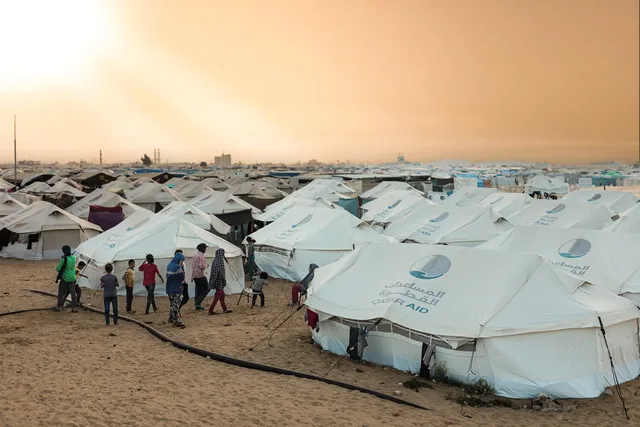
These obstacles create a volatile environment for relief workers. The following table compares recent delivery figures to historical averages during periods of relative stability:
| Delivery Metric | Recent Entry (Dec 3-4) | Ceasefire Daily Average |
|---|---|---|
| Humanitarian Aid Trucks | Approximately 100 | 170 |
| Fuel (Litres) | 69,000 | 110,000 |
The reduction in both vehicle counts and fuel volumes demonstrates the difficulty of maintaining consistent supply chains during active hostilities.
Delivery efforts face challenges such as damaged infrastructure, active conflict zones, and administrative delays at border crossings.
How do organizations report aid blockages?
A field officer writes a report in a dimly lit tent, noting the specific crossings where supplies have stalled. They check the timestamps against the movement of the convoys.
Multiple international bodies have documented the restriction of movement. In July 2024, 13 human rights organizations, including Oxfam, Doctors Without Borders, Save the Children and the Norwegian Refugee Council, stated Israel was blocking humanitarian aid.
The Palestine Red Crescent Society stated in June 2024 that Israel was blocking humanitarian aid from entering through the Rafah crossing, in violation of ICJ orders. These reports highlight the legal and physical challenges faced by relief teams.
Reporting occurs through real-time field updates, formal communication channels between logistics officers, and shared tracking logs.
What steps are taken to manage relief convoys?
A logistics coordinator checks a clipboard, verifying the contents of a convoy before it departs for a northern destination. They ensure every crate is accounted for.
Managing a relief mission requires strict adherence to specific protocols to ensure survival in high-risk zones.
- Coordinate with international oversight bodies to request passage through designated crossings. 2. Secure transit through established humanitarian corridors, though success rates vary. 3. Document all denials or physical interference for official reporting to the United Nations.
After completing these steps, a final check of the convoy's fuel and medical supplies must be performed. I found that even with these steps, the reality on the ground often deviates from the planned schedule.
- Conduct pre-departure inspections of all vehicles and cargo.
- Coordinate movement windows with local authorities and security teams.
- Monitor real-time GPS locations to ensure route adherence.
Are there specific limitations to these efforts?
A volunteer watches a single truck pass through a gate, knowing that hundreds more remain stuck in the heat. The sense of inadequacy is palpable in the quiet afternoon air.

The effectiveness of relief missions is significantly limited by the ability of authorities to facilitate movement. For instance, the United Nations stated that only 55% of its aid missions to northern Gaza in April were facilitated by Israel.
This limitation means that even the most well-funded and organized relief efforts cannot guarantee the arrival of supplies. The success of a mission is often dependent on external political decisions rather than the efficiency of the relief team itself.
Limitations include restricted access to certain geographic regions, fluctuating fuel availability, and unpredictable weather conditions.
The subject here is Canada emergency relief team.
The same subject is also called Domestic foreign aid Canada.
This part also covers Canada cultural activities report.
This part also covers Emergency relief team operations.
Are aid trucks currently entering the region?
On 4 December, the United Nations Office for the Coordination of Humanitarian Affairs (OCHA) stated that approximately 100 humanitarian aid trucks and 69,000 litres of fuel entered Gaza on 3 and 4 December.
The difficulty of international aid delivery is defined by the gap between planned logistical movements and the actual reality of contested borders and restricted crossings.
Comments 0